Books
Five books. One structural architecture.
A connected book sequence translating the research behind the practice into forms for general readers, practitioners, founders, strategists, and builders.
Seeing Systems is at proof stage. The 15-Level Abstraction Ladder has a complete first draft. Three further volumes extend the architecture into founder doctrine, build systems, and the full structural field.
Publishing and representation enquiries are welcome. Sample chapters, proposals, manuscripts, and sequence materials are available for serious enquiries.
the sequence
Book 02
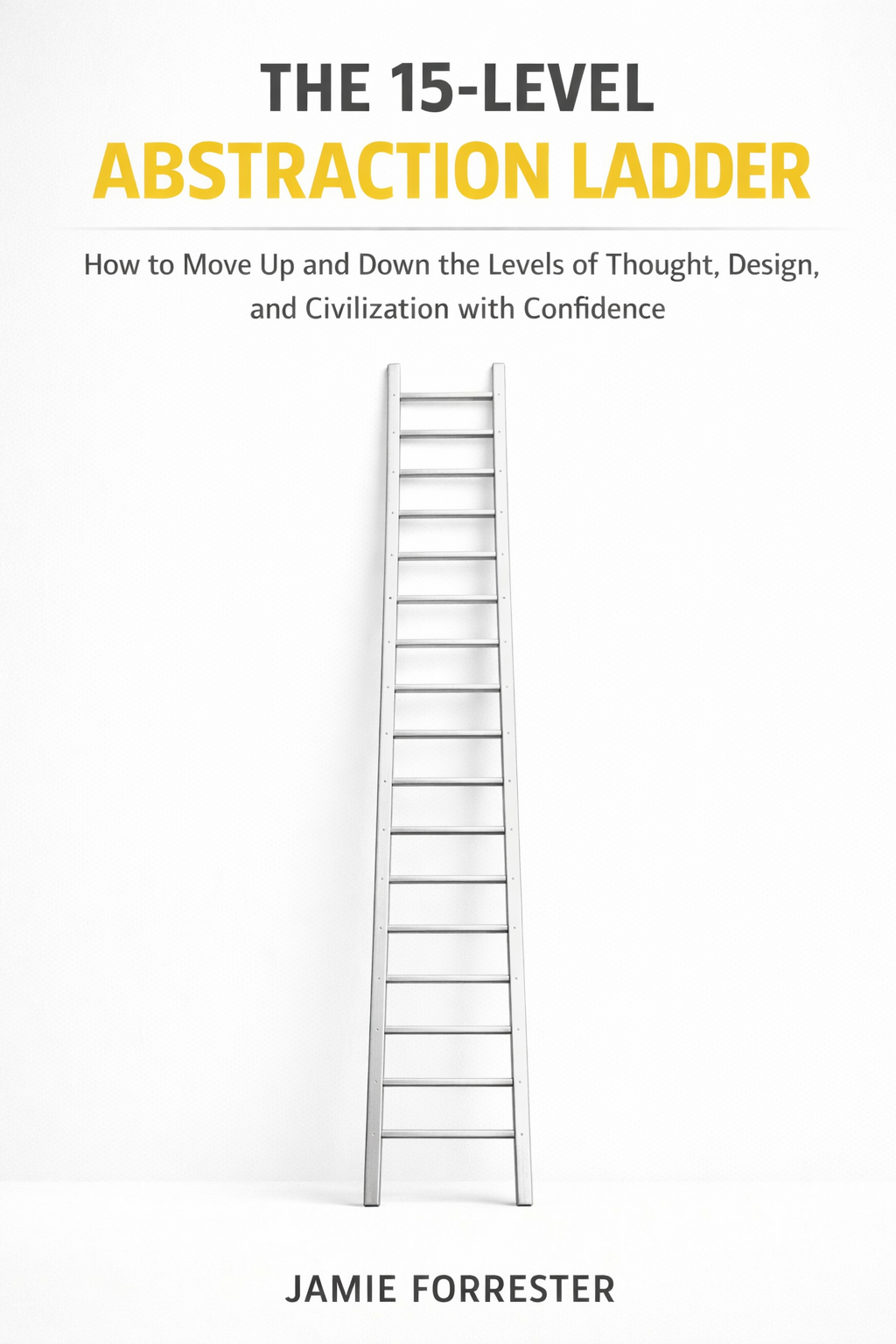
The 15-Level Abstraction Ladder
Book 03
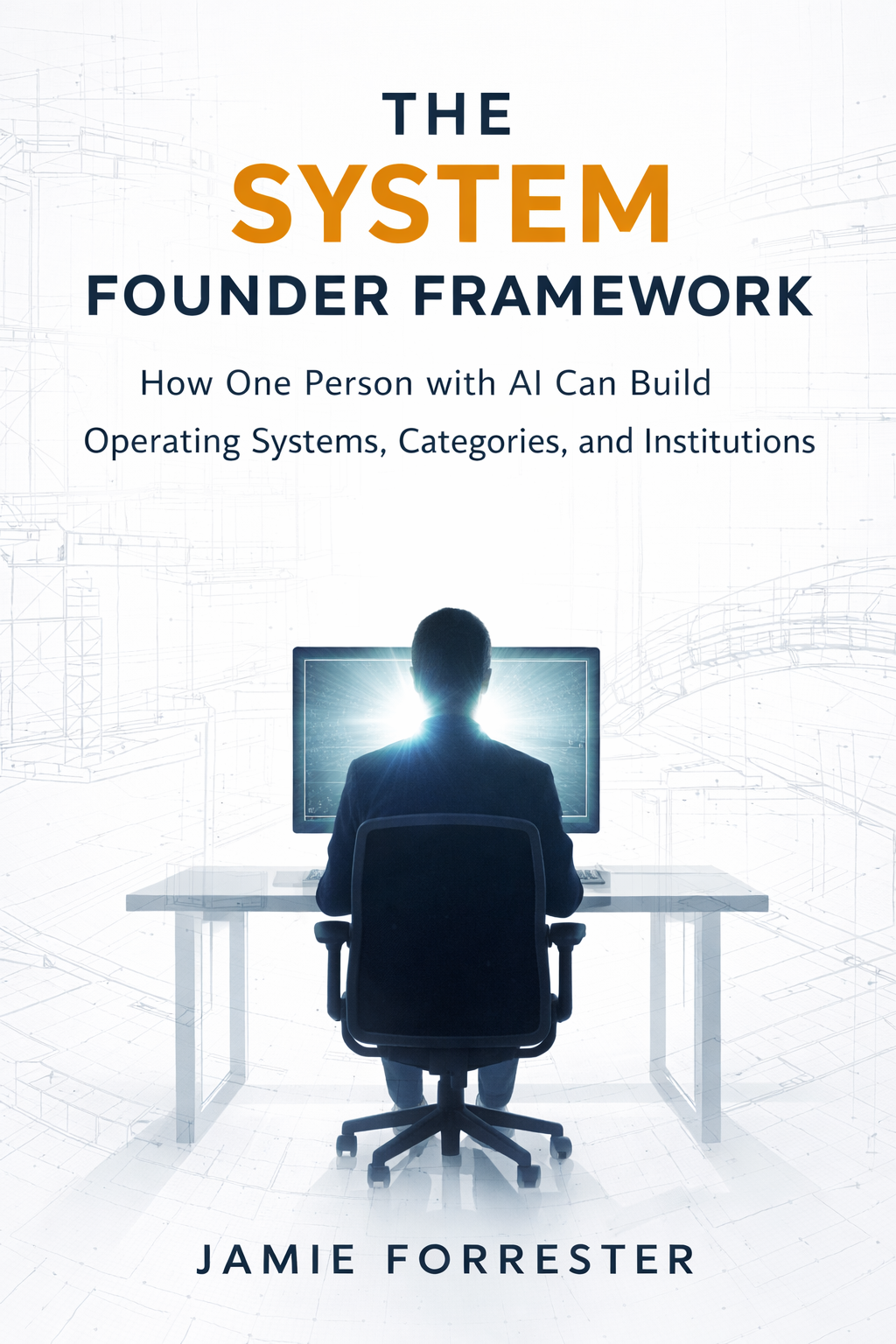
The System Founder Framework
Book 04
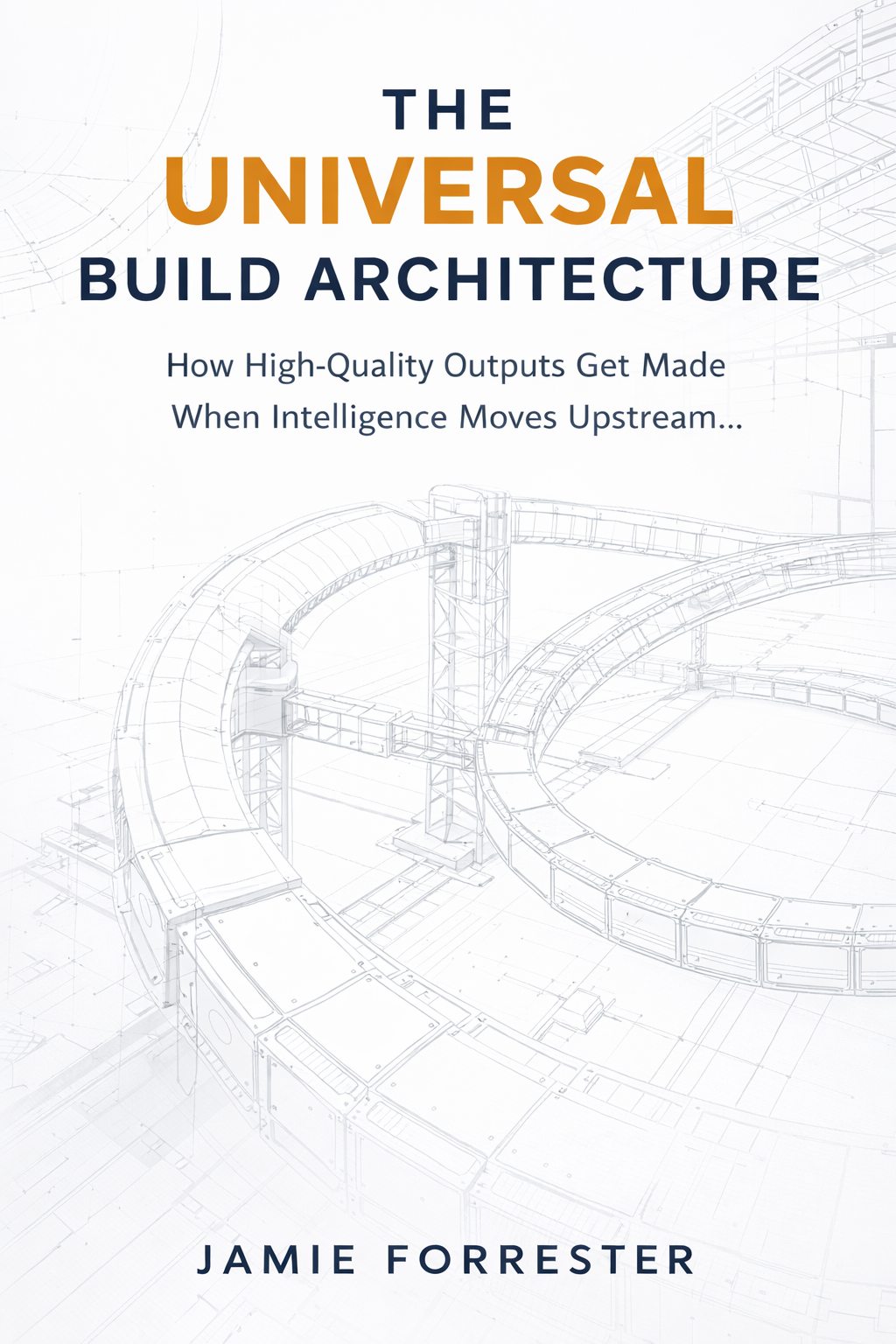
The Universal Build Architecture
books in development
A Field Guide to Structural Literacy
Seeing Systems
Complexity is not the problem. The action is hidden.
Before you can think in systems, you have to be able to see them. Most books about systems begin too late — they explain complexity, feedback, leverage, and change. This book starts earlier. It teaches structural literacy: the ability to see what a system is actually doing, how it works, where it fails, and why the same problems keep returning. Using the carrier method and the 60-second scan, it shows you how to read systems through everyday objects — doors, queues, turnstiles, timetables, conveyor belts. A field guide for seeing systems clearly before you try to change them.
By the end, you will know how to: find what a system is actually for · name the primitive action it repeats · separate real rules from written rules · follow where work disappears · see who is carrying the missing structure · recognise why the same failure keeps returning.
General audience
Carrier method
60-Second Scan
Proof copy submitted
Thinking at multiple levels of abstraction
The 15-Level Abstraction Ladder
How to move up and down the levels of thought, design, and civilisation with confidence.
A navigation system for altitude. Explains why people get trapped at one level of reasoning, why disagreement is often an altitude mismatch rather than an intelligence gap, and how to move deliberately between observation, product, system, infrastructure, marketplace, civilisation, primitive, and meta-operating law. This book is a map of how to move between fifteen levels of abstraction and when each level is the right one to be working at.
Core argument: Most disagreement is not about facts or values. It is about altitude. Two people operating at different abstraction levels will produce incompatible outputs even when starting from the same intent — and neither will know why.
15 levels
Altitude control
Practitioners + strategists
How one person with AI builds OS-level companies
The System Founder Framework
How one person with the right structural grammar and AI capability can build operating-system level companies.
The system founder is not a solo founder in the conventional sense. They are someone who can hold the full structural read of a system — its primitive, its rules, its failure modes — and use AI as a production and amplification layer rather than a replacement for structural thinking. This book defines the system founder's cognitive architecture, the AI coordination stack, and the founding sequence that makes OS-level companies buildable by a single structured thinker.
Core argument: The rarest founder type is not the one with the best product instinct. It is the one who can see the operating environment that doesn't yet exist and build the rules before the participants arrive. AI collapses the execution cost of doing this alone.
Founder doctrine
AI leverage
System company design
Category formation
Grammar Kernel · high-quality output production
The Universal Build Architecture
How high-quality outputs get made when intelligence moves upstream.
A general build law across code, prose, artifacts, systems, learning, and governance. Most poor outputs are not execution failures but upstream architecture failures. This book shows where the pattern transfers strongly, partially, or weakly depending on whether the domain is construction, discovery, or emergence. The production manual for the practice — applicable to any domain where structural output quality matters.
Core argument: Quality is not a property of execution. It is a property of upstream architecture. Every domain that produces consistently high-quality outputs does so by resolving ambiguity, constraints, and intent before execution begins. This is the transferable law.
Upstream design
Cross-domain transfer
Build law
General theory
Triple Stack · emergence, production, intervention
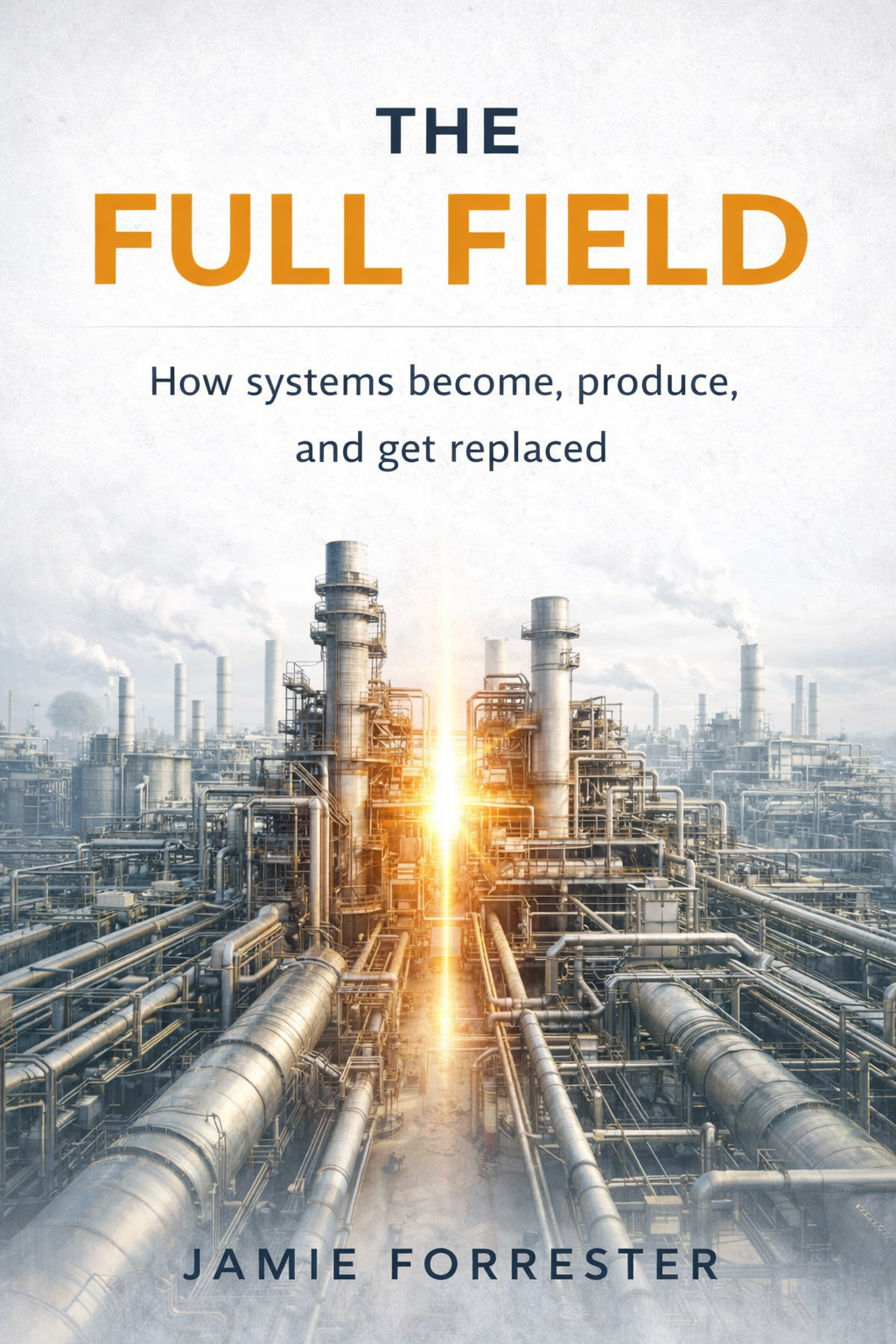
The Full Field
How systems become, produce, and get replaced.
The geometry above the ladder. Unifies the Universal Formula (emergence), the Grammar Kernel (production), and the intervention sequence from the Diagnostic and Replacement Series into the Triple Stack. Proves the Law of Structural Invariance: the primitive is the unique node present simultaneously in all three axes. The culminating volume of the sequence — for readers who have come through the earlier books or the research series.
Core argument: Emergence, production, and intervention are not three separate fields. They are three axes of a single coordinate system, and the primitive is the unique invariant node where all three intersect. Once that is visible, every prior book in the sequence becomes a special case of the same structure.
Triple Stack
Geometric unification
Emergence · production · intervention
Advanced
the relationship to the research
The papers
The research programme currently includes 10 published papers, the complete Diagnostic Taxonomy, and a wider 59-paper programme mapped. The papers are technical, evidence-anchored, and written for practitioners and researchers.
View the research →
The books
The books are the teachable form. They carry the same structural logic into forms readable without prior knowledge of the research. Each book is a different entry point into the same architecture.
Request the full taxonomy →
Ready to engage now?
The practice is live now. View the current fixed-scope engagements.
VIEW SERVICES →
Publishing and representation
A five-book sequence already underway.
Seeing Systems is at proof stage, The 15-Level Abstraction Ladder has a complete first draft, and the remaining volumes are mapped within the wider architecture. Sample chapters, book proposals, manuscripts, series architecture, and supporting research materials are available for publishers and literary agents.
If you want to be notified when a book becomes available,
request a notification with "Book notification" in the subject line.